
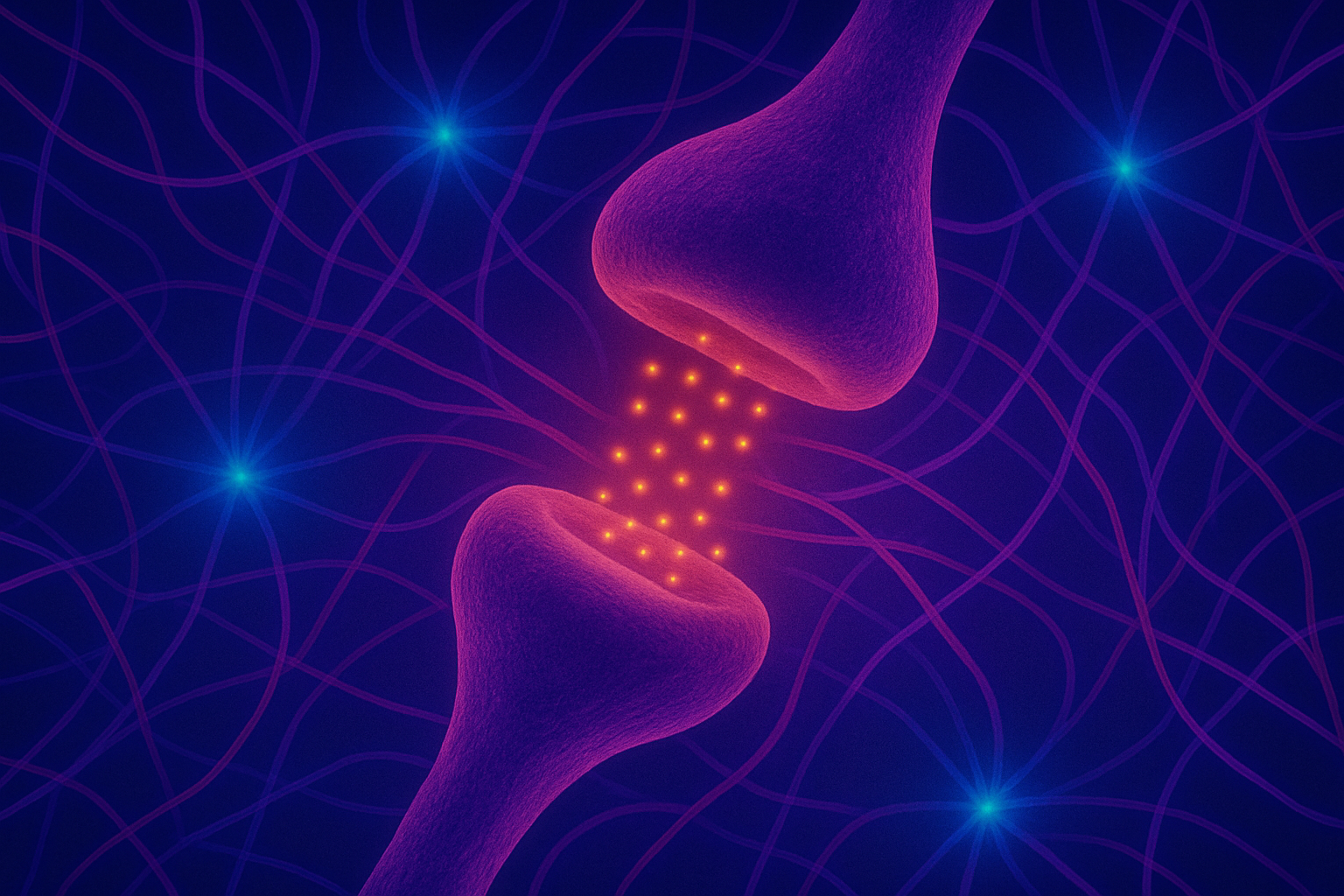
For millions struggling with depression, anxiety, OCD, and trauma, traditional antidepressants like SSRIs offer hope but not always results. If you have tried medication without finding the relief you need, emerging research on psychedelic medicine offers a compelling explanation: these compounds work in fundamentally different ways at the cellular level.
When Traditional Treatments Fall Short
Conventional antidepressants primarily work by adjusting chemical messengers between neurons. SSRIs increase serotonin availability in the brain by preventing its reabsorption at the synapse. While this approach helps many, it leaves a significant portion of patients searching for alternatives. The emotional numbness, persistent symptoms, or lack of deeper insight that some experience with SSRIs has led researchers to investigate radically different approaches.
The Cellular Revolution: Dr. Olson’s Research
Dr. David Olson, a neuroscientist at UC Davis, has uncovered a fascinating difference in how psychedelics affect the brain. While SSRIs work primarily at the synapse, psychedelics penetrate the neuron itself. Once inside, these substances trigger a cascade of effects that activate growth pathways within the cell, leading to growth of new dendritic spines, enhanced neuroplasticity, and structural remodeling of neural networks.
In his 2018 landmark study, Dr. Olson’s team demonstrated that psychedelics promote structural and functional neural plasticity. His more recent 2023 research further elucidated the mechanism, showing that psychedelics activate neuroplasticity specifically through intracellular 5-HT2A receptors located inside neurons. In simpler terms: psychedelics do not just change the chemical messages. They change the physical structure of brain cells themselves.
Reopening Critical Periods: Dr. Dölen’s Revolutionary Insights
Dr. Gul Dölen’s research at Johns Hopkins has revealed another extraordinary dimension: the potential to reopen critical periods in the adult brain. Critical periods are specific windows during development when the brain is exceptionally malleable and primed for learning, much like how children effortlessly acquire language or how young animals rapidly develop social bonds.
Dr. Gul Dölen’s studies suggest that psychedelics can temporarily reopen these critical periods in adults, creating brief windows of heightened neuroplasticity. Her 2019 research demonstrated the ability to reactivate social learning capabilities, while her 2023 work extended these findings to multiple psychedelic compounds. This has profound implications for treating conditions rooted in early life experiences.
By enhancing neuroplasticity and potentially reopening critical periods, psychedelics help the brain create entirely new neural pathways rather than just modifying existing ones.
SSRI Interactions: What Clinicians Should Know
Many patients ask whether they need to discontinue their SSRIs before psychedelic therapy. Ketamine has minimal interference due to its primary action on glutamate systems rather than serotonin, and SSRI use does not require a taper. Psilocybin may reduce intensity but does not completely block therapeutic effects. MDMA relies heavily on serotonin release and SSRIs significantly blunt the therapeutic effect, so a medically supervised taper is typically recommended when clinically appropriate.
For patients who have felt that conventional treatments only scratch the surface of their struggles, this neurobiological reset may be the key to breakthrough experiences that conventional medications simply cannot provide. The question is not whether to try something different. It is whether the right support exists to make that difference lasting.
Take the Next Step with AK Psychology Group
At AK Psychology Group, we specialize in Psychedelic-Assisted Therapy, offering personalized treatment plans that integrate the latest scientific insights with compassionate care. If you’re ready to explore transformative healing beyond traditional approaches, contact us today to schedule a consultation.
This article is for informational purposes only and does not constitute medical advice. Always consult with qualified healthcare providers regarding treatment options for any medical condition.
References
- Ly, C., Greb, A. C., Cameron, L. P., Wong, J. M., Barragan, E. V., Wilson, P. C., … & Olson, D. E. (2018). Psychedelics promote structural and functional neural plasticity. Cell Reports, 23(11), 3170–3182.
- Vargas, M. V., Dunlap, L. E., Dong, C., Carter, S. J., Tombari, R. J., Jami, S. A., … & Olson, D. E. (2023). Psychedelics promote neuroplasticity through the activation of intracellular 5-HT2A receptors. Science, 379(6631), 1301–1306.
- Nardou, R., Sawyer, E. K., Song, Y. J., Wilkinson, M. B., Padovan-Hernandez, Y., de Deus, J. L., … & Dölen, G. (2023). Psychedelics reopen the social reward learning critical period. Nature, 618(7966), 123–131.
- Nardou, R., Lewis, E. M., Roth, B. L., & Dölen, G. (2019). Oxytocin-dependent reopening of a social reward learning critical period with MDMA. Nature, 569(7754), 116–120.